


Have you ever eagerly connected a new monitor, laptop, or game console, only to find out you simply don’t have enough ports or connections? You’re not alone. We often get questions like: “Do I need a USB-C hub or an HDMI switch?” And that’s a valid question, because although they sometimes look similar, they do completely different things.
In this blog, I’ll explain it to you step by step — without technical jargon. Just clear and practical. By the end, you’ll know exactly which one suits your situation best.
What exactly does a USB-C hub do?
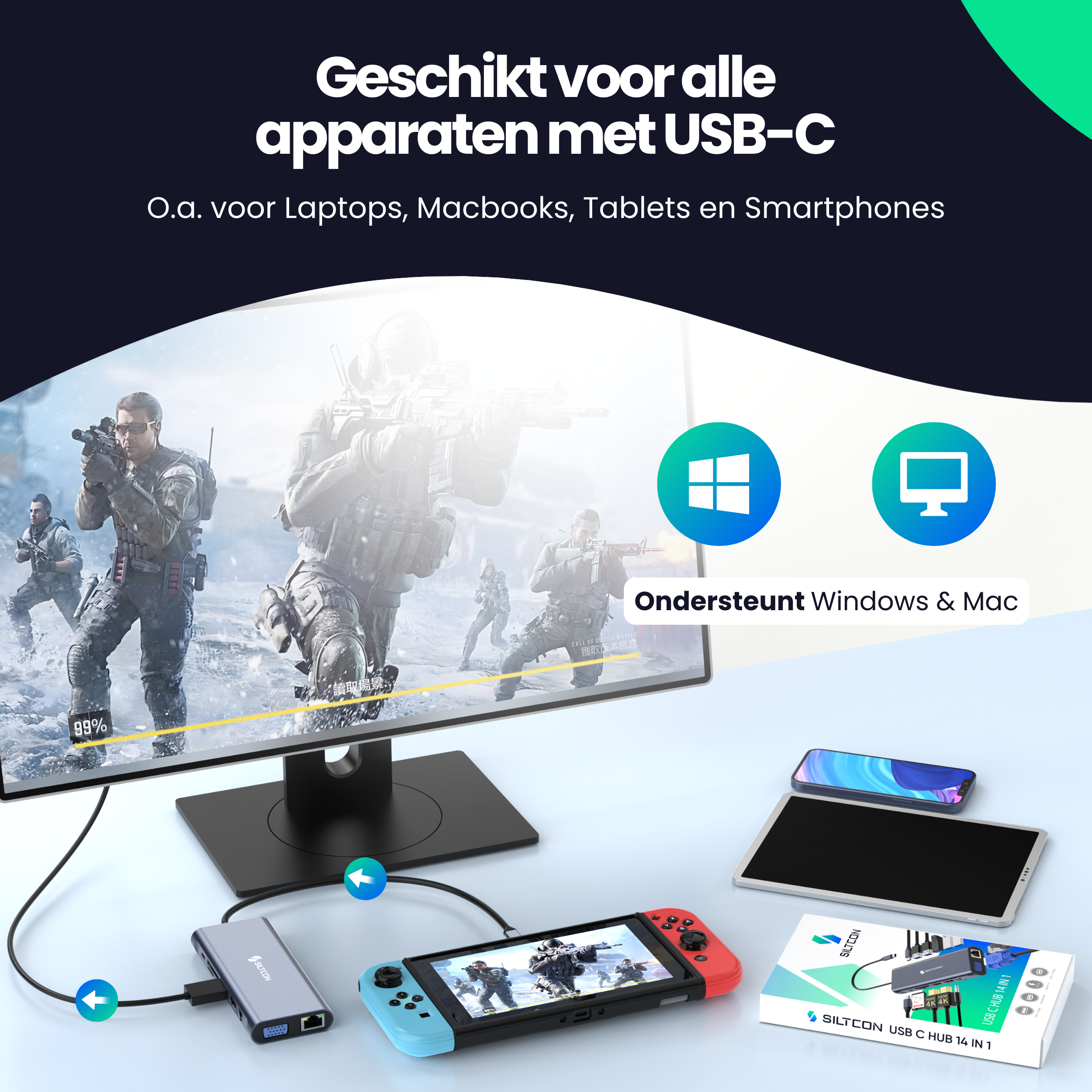
Let’s start with the USB-C hub. Think of it as a kind of power strip, but for your laptop. You plug one USB-C cable into your laptop, and in return, you suddenly get a whole bunch of extra connections: HDMI, USB-A, SD card, ethernet, you name it.
If you work with a modern laptop with few ports (like many MacBooks and Windows Ultrabooks), a USB-C docking station is often indispensable. This way, you can still use your mouse, keyboard, external monitor, USB stick, and charger all at once. Very practical if you want to connect everything at your workspace in one go.
And what about an HDMI switch?
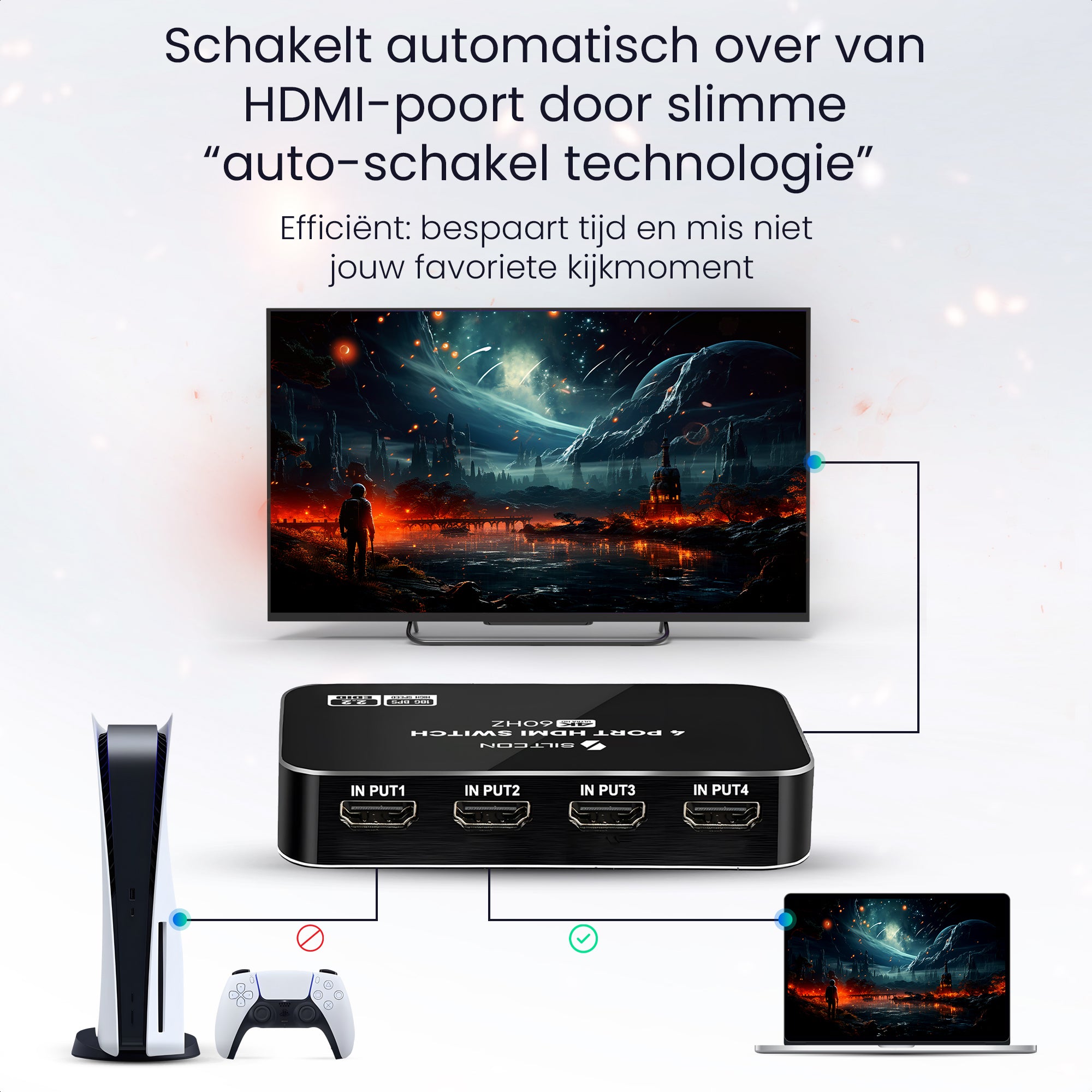
An HDMI switch does something very different. Instead of connecting one device to multiple things, it’s about connecting multiple devices to one screen. Think of your game console, laptop, and media player that you all want to use on one TV or monitor — but you only have one HDMI input available.
Buying an HDMI switch lets you switch between those devices without having to swap cables each time. Our models even have a button or remote control for easy switching. Handy, right?
So what’s the big difference?
It basically comes down to this:
- A USB-C hub expands the capabilities of your laptop or tablet.
- An HDMI switch helps you connect multiple devices to one screen.
They sometimes look alike, but do something completely different. The hub is mainly for work and productivity, while the switch belongs more in your TV corner or gaming setup.
When do you choose which?
Scenario 1: You work on a laptop with only USB-C ports
Then you want a USB-C hub. This way, you can connect everything you need: monitor, keyboard, mouse, USB stick, charger — all with just one cable.
Scenario 2: You have a TV with only one HDMI input
But you want to connect your Playstation, laptop, and Apple TV to it. Then an HDMI switch is your solution. You connect all your devices to the switch, and the switch to your TV. Done.
Scenario 3: You have a laptop and want to use an extra monitor
In that case, you also choose a USB-C hub with HDMI port. Note: not all hubs can transmit video, so check if it supports “video output.”
Frequently Asked Questions
Can I use an HDMI switch on my laptop?
Only if you want to connect multiple devices to the same screen. But if you want to connect multiple screens to your laptop, you need a USB-C docking station.
Is there a difference between an HDMI splitter and an HDMI switch?
Yes. A switch is multiple devices → one screen.
A splitter is one device → multiple screens.
Can I also use a USB-C hub on my tablet?
Yes, if your tablet supports USB-C and provides video output. Many Android tablets and iPads can do this.
Does the image quality degrade with an HDMI switch?
Not if you use a good switch. Make sure it supports at least 4K 60Hz if you need that.
In conclusion
In summary:
- Want to expand your laptop with more connections? → Choose a USB-C hub or docking station
- Want to connect multiple devices to one TV or monitor? → Go for an HDMI switch
Still unsure? Send us a message — we’re happy to help you figure it out.